General
Sleeping in a Different Era Along Maryland's 200-Year-Old Canal
Imagine walking along a quiet towpath beside an old canal, passing historic locks hidden beneath trees.
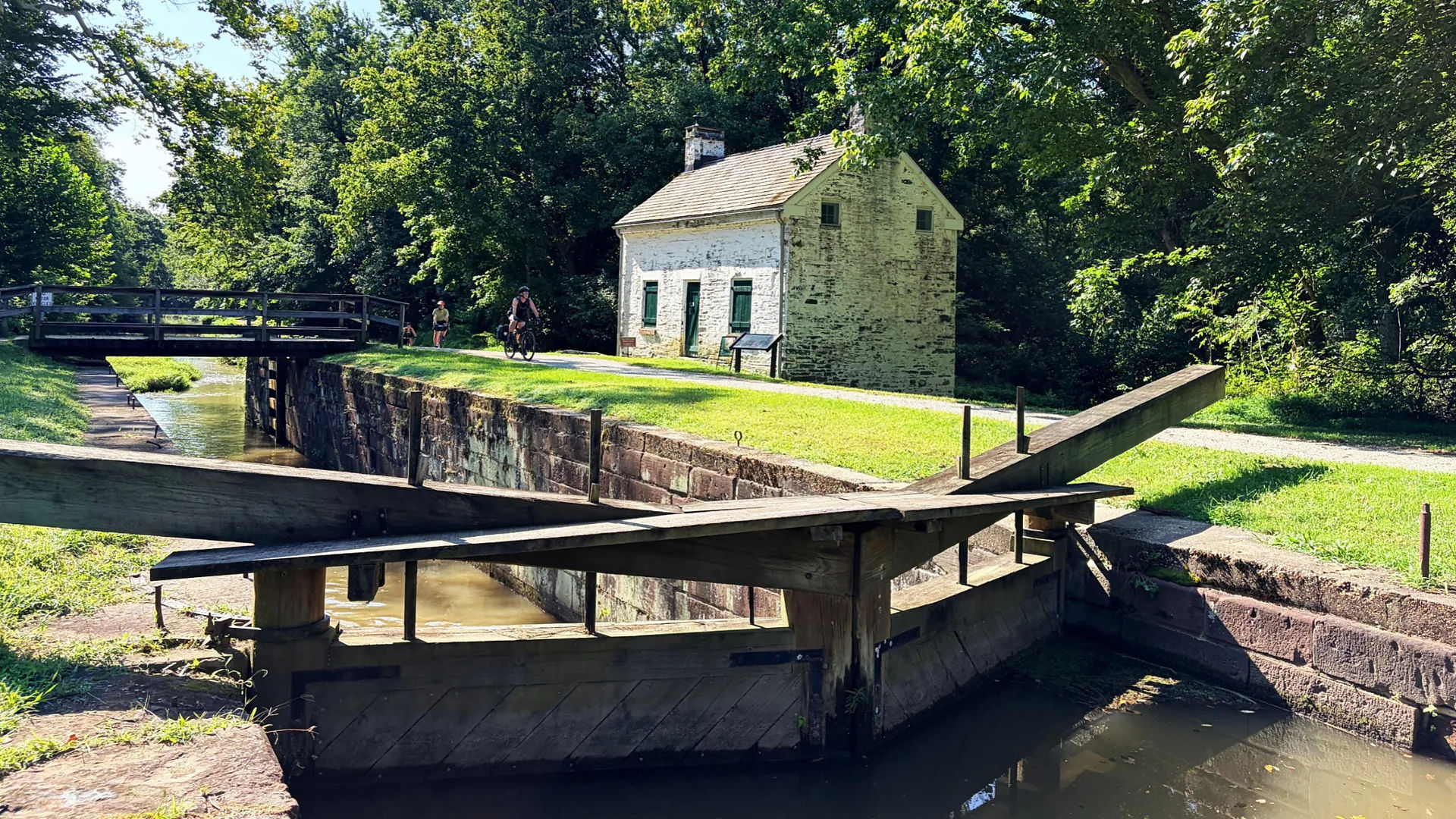
Imagine walking along a quiet towpath beside an old canal, passing historic locks hidden beneath trees, before arriving at a small stone house that once belonged to a canal lockkeeper.
Along Maryland's Chesapeake & Ohio Canal, that experience is now possible.
Several historic lockhouses have been restored as overnight accommodations, allowing visitors to experience a small part of the landscape's past rather than simply viewing it in a museum.
The programme is known as **Canal Quarters**, operated by the C&O Canal Trust in partnership with the National Park Service. The historic houses are interpreted around different periods of the canal's history.
## A Canal Built for Trade
The Chesapeake & Ohio Canal was developed in the 19th Century as a transportation route intended to connect Washington, DC, with the western interior.
Construction began in the 1820s, with the formal groundbreaking taking place in 1828 under President John Quincy Adams.
The original ambition was to reach the Ohio River, but the canal ultimately ended in Cumberland, Maryland, about 184.5 miles from Georgetown.
The waterway operated commercially for **93 years**.
At its height during the 1870s, hundreds of mule-drawn boats moved through the canal, supported by **74 locks** operated by canal lockkeepers.
Railroads eventually proved more competitive, changing the economics of transportation in the region.
The canal ceased commercial operations in 1924.
## From Working Waterway to National Historical Park
After its commercial era ended, the canal gradually became a historical and recreational landscape.
Today, the corridor forms part of the **Chesapeake & Ohio Canal National Historical Park**, managed by the National Park Service.
The former towpath has become a popular route for hiking and cycling.
It stretches approximately **184.5 miles, or 297 kilometres**, alongside the historic canal and the Potomac River between Georgetown and Cumberland.
For visitors, the trail provides a way to experience history through the landscape itself.
## Sleeping in a Historic Lockhouse
One of the most distinctive experiences along the canal is spending the night in a former lockhouse.
These small buildings once housed the people responsible for operating the canal's locks.
The work was demanding. Lockkeepers had to help boats pass through the locks and maintain the system that kept the commercial waterway functioning.
The National Park Service describes the surviving lockhouses as important architectural resources that reflect the social, cultural and economic history of the canal and the Potomac Valley.
Today, several have been restored for overnight stays.
## Eight Houses, Different Stories
The Canal Quarters programme currently includes **eight historic lockhouses**.
They differ in both historical interpretation and modern amenities.
Some include electricity, kitchens and indoor bathrooms, while others intentionally preserve a much more rustic experience without electricity or indoor plumbing.
The current Canal Quarters collection includes:
* **Lockhouse 6 – Brookmont**
* **Lockhouse 8 – Seven Locks**
* **Lockhouse 10 – Cabin John**
* **Lockhouse 21 – Swains**
* **Lockhouse 22 – Pennyfield**
* **Lockhouse 25 – Edward's Ferry**
* **Lockhouse 28 – Point of Rocks**
* **Lockhouse 49 – Four Locks**
Each house is associated with a particular period or aspect of the canal's history.
## From Modern Comforts to a Rustic Stay
The houses are deliberately different from conventional hotels.
Some offer electricity, heating or cooling, kitchens and indoor plumbing.
Others are much more basic, with no electricity or heating and an outdoor toilet.
The differences are part of the historical experience rather than a sign of incomplete accommodation.
Visitors are also expected to bring their own bedding and towels.
## Each House Offers a Different Time Period
The Canal Quarters concept goes beyond simply preserving old buildings.
The interiors are furnished and interpreted to represent different periods in the canal's history.
According to the National Park Service, the furnishings and objects in the lockhouses help visitors imagine what life was like decades or even more than a century ago.
A stay can therefore become a form of time travel, with different buildings offering different interpretations of the canal's past.
## Lockhouse 8 and the 1960s
One of the newer additions to the programme is **Lockhouse 8** near Cabin John.
The building dates to the 1830s and has witnessed nearly two centuries of history in Maryland and the Washington region.
During the 1960s, the building was repaired with the intention of serving as National Park Service staff housing.
Its current interpretation reflects that period, offering visitors an experience different from the houses designed around the canal's 19th-Century working years.
Lockhouse 8 has electricity, fans, baseboard heating and water, but no indoor plumbing. An outdoor toilet is available nearby.
## Hiking and Cycling the Towpath
An overnight stay can also form part of a longer journey.
The C&O Canal Towpath extends for almost 300 kilometres and can be explored by bicycle or on foot.
Long-distance cyclists can cover the entire route over several days, while visitors with less time can explore shorter sections.
Several historic lockhouses are concentrated in the first section near Georgetown, making that area suitable for shorter trips.
## Starting in Georgetown
The journey can begin in **Georgetown, Washington, DC**, the canal's mile-zero point.
From the historic urban neighbourhood, the towpath gradually transitions into a greener landscape as it follows the canal into Maryland.
The contrast is part of the experience: within a relatively short distance, visitors move from busy city streets to forests, waterways, historic locks and small stone buildings.
## A Canal Shaped by the Civil War
The C&O Canal also played a role during the **American Civil War**.
The waterway was an important supply route for Union forces and was also targeted by Confederate forces during the conflict.
The towpath and surviving structures therefore represent more than an old transportation system. They are also part of a wider historical landscape connected to one of the defining conflicts in American history.
## More Than a Place to Sleep
The appeal of Canal Quarters is not luxury.
In some houses, the lack of modern conveniences is deliberately part of the experience.
Visitors can sit around a fire, prepare simple meals and experience the quiet of the canal after the day's hikers and cyclists have gone.
In the more rustic houses, that may also mean living without electricity or indoor plumbing.
In exchange, guests get a closer connection to the environment and the history of the people who once lived along the canal.
## Current Rates and Reservations
The C&O Canal Trust currently lists eight Canal Quarters properties.
Rates depend on the type of house and the season.
For **May through October**, current listed rates range from approximately **US$120 to US$175 per night**, depending on amenities. Some rates are lower between November and April.
Each house can accommodate up to eight overnight guests, although facilities differ.
Reservations are handled through the C&O Canal Trust, and availability can change.
## What Visitors Should Know
Anyone planning a Canal Quarters stay should approach it differently from booking a conventional hotel.
Before travelling:
* Check the amenities of the specific lockhouse.
* Bring the required bedding and towels.
* Carry food and drinking water.
* Bring enough water for longer sections of the towpath.
* Wear suitable outdoor footwear.
* Check weather conditions before setting out.
* Pay attention to access and parking arrangements.
* Treat the historic furnishings and buildings carefully.
The C&O Canal Trust emphasises that these historic houses are intended as interpretive experiences rather than conventional hotel accommodation.
## When History Becomes Your Accommodation
Historic places are often experienced from behind museum glass.
The C&O Canal offers something different.
A visitor can walk through a landscape once shaped by commercial boats and mule teams, enter a building once occupied by a lockkeeper and spend the night surrounded by traces of another era.
During the day, the old towpath is a route for hikers and cyclists.
At night, selected lockhouses become temporary homes for travellers.
It is an unusual form of heritage tourism — one in which the past is not simply something to look at, but somewhere to stay.
---
## Sumber / Sources
* BBC Travel, Chelsey Stone, *Sleep in a different era along Maryland's 200-year-old canal*, September 2026.
* C&O Canal Trust, **Canal Quarters** — informasi delapan *lockhouses*, fasilitas, tarif dan reservasi.
* National Park Service, **C&O Canal National Historical Park** — sejarah *lockhouses* dan kanal.
* C&O Canal Trust, **Lockhouse 8** — sejarah dan fasilitas terbaru.